

Premium Hardwood Floor Installation
Investing in premium hardwood flooring is one of the most significant upgrades you can make to your home. Beyond its undisputed aesthetic appeal, high-end hardwood increases property value, improves indoor air quality, and lasts for generations. However, the ultimate beauty, stability, and longevity of a luxury wood floor depend entirely on the precision of its installation.
A premium installation requires an uncompromising marriage of master craftsmanship, advanced moisture testing, and meticulous substrate preparation.
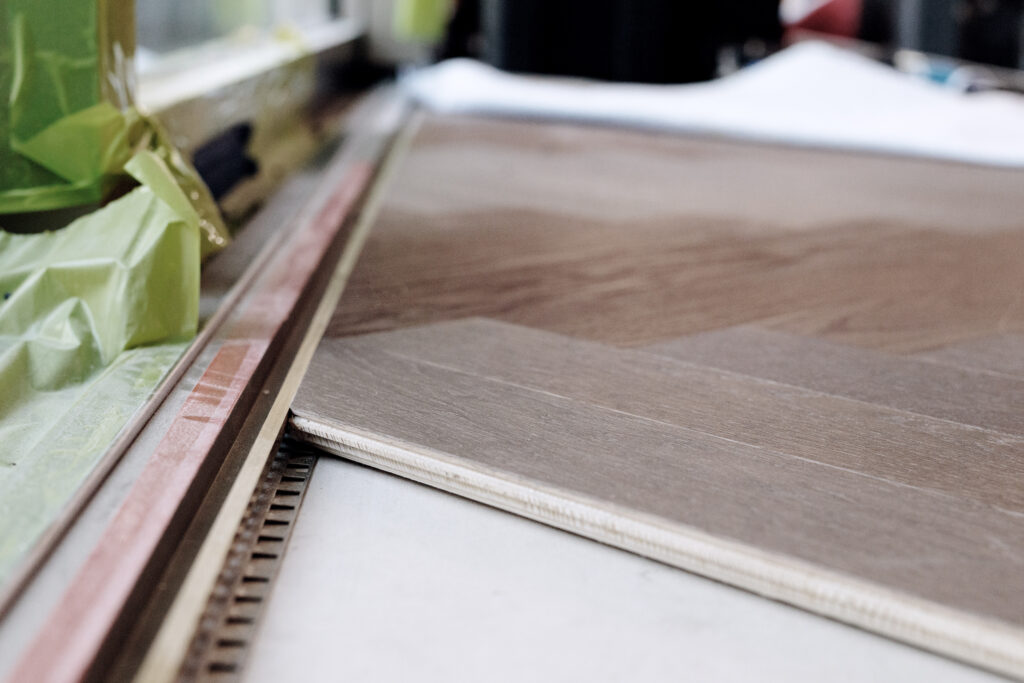
Solid vs. Engineered: Selecting Luxury Hardwood
Before the installation process begins, choosing the correct structural makeup of your premium wood planks is essential for a successful, long-term fit.
- Solid Premium Hardwood: Each plank is a single, continuous piece of solid timber, typically 3/4-inch thick. Solid wood offers unmatched longevity because it can be sanded and refinished multiple times. It is ideal for above-grade spaces with stable relative humidity.
- Engineered Premium Hardwood: Built with a real hardwood wear layer bonded over high-density, cross-ply structural layers. Premium engineered flooring mostly features a thick wear layer (4mm to 6mm) that rivals solid wood. Its cross-ply core provides superior dimensional stability, making it the premier choice for wider planks, concrete slabs, radiant heating systems, and below-grade basements.
Critical Pre-Installation: Acclimation and Moisture Testing
The most common cause of hardwood floor failure—such as cupping, crowning, and buckling—is moisture imbalance. Wood is a hygroscopic material that expands and contracts based on surrounding atmospheric conditions.
The Acclimation Process
For newly constructed homes, the indoor environment must first stabilize at its long-term average relative humidity. Our flooring planks arrive with a moisture content pre-conditioned to the median relative humidity of a typical Southern Ontario home. In these cases, the house and the wood are already matched to the same humidity level, no additional acclimation is required.
- Unpack and Stack: Deliver the hardwood to the jobsite and stack the boxes or open bundles cross-wise in the room where they will be installed.
- Set HVAC Controls: Run your home’s heating, ventilation, and air conditioning (HVAC) systems at normal living temperatures (60°F to 75°F) and relative humidity levels (35% to 55%) for at least 5 to 7 days prior to delivery.
- Do Not Rush: Premium species, particularly exotic hardwoods like Brazilian Cherry or Ipe, require longer acclimation periods than domestic species like White Oak or Maple.
Scientific Moisture Testing
Never rely on a calendar to determine when wood is ready. A professional installer must use a calibrated wood moisture meter:
- Subfloor Verification: Measure the moisture content of the wood subfloor.
- The Golden Differential: For domestic solid strip flooring (under 3 inches wide), the moisture content of the hardwood planks must be within 4% of the subfloor. For wide-plank flooring (3 inches or wider), the difference must be within 2%.
Methods of Premium Hardwood Installation
The subfloor material and your chosen wood style dictate the correct installation method. Each technique requires specific tools and fasteners to guarantee a silent, solid floor.
- The Nail-Down / Cleat-Fastened Method
This is the gold standard for installing solid hardwood floors over plywood or OSB wood subfloors.
- Underlayment: Lay down a high-performance vapor retarder, such as wax paper or a specialized silicone vapor shield, to block moisture from below and prevent floor squeaks.
- Fasteners: Use a pneumatic flooring nailer to drive 2-inch flooring cleats through the tongue of the board at a strict 45-degree angle. Space fasteners every 6 to 8 inches along the board, and within 2 inches of every end joint.
- The Glue-Down Method
The glue-down method is mandatory for installing engineered hardwood directly over concrete slabs or radiant heating tubes.
- Adhesive Selection: Use a premium, moisture-curing urethane or silane-modified polymer adhesive. Avoid water-based glues, which can cause wood planks to warp during installation.
- Moisture Barrier Matrix: Many luxury adhesives double as a liquid vapor barrier when applied with the manufacturer’s specified trowel notch depth, adding a vital layer of insurance against concrete moisture vapor.
- The Full-Glue Assist Method
For modern wide-plank installations (planks 5 inches wide or broader) over wood subfloors, mechanical fasteners alone are not enough to prevent board movement. A “glue-assist” combines the nail-down method with beads of high-bond polyurethane adhesive applied to the back of each board in a serpentine or parallel pattern. This eliminates hollow spots, curbs seasonal shifting, and ensures a completely silent walk.
Mastering the Layout: Racking and Expansion Gaps
A premium hardwood installation is defined by its visual balance and structural integrity, which are achieved during the layout and “racking” phase.
Visual Racking
Before fastening any boards, installers lay out several rows of loose planks across the floor. This structural puzzle ensures an elegant composition:
- Stagger End Joints: Ensure the end joints of adjacent boards are offset by at least 6 to 8 inches to avoid structural weak points.
- Blend Tones: Draw planks from multiple boxes simultaneously to evenly distribute natural color variations, mineral streaks, and grain patterns throughout the space.
- Avoid H-Joints: Prevent “H-joints” (where end joints line up in alternating rows) or step-pattern staircases, which look cheap and amateurish.
The Expansion Gap Perimeter
Wood needs room to breathe. Installers must leave a precise 1/2-inch expansion gap around the entire perimeter of the room, including doorways, hearths, and vertical obstructions. This gap is hidden by baseboards and shoe moldings, allowing the floor to expand safely during humid summer months without buckling.

Luxury Finishing Options: Site-Finished vs. Factory-Finished
The final design choice for your premium hardwood flooring impacts both the installation timeline and the final aesthetic.
- Site-Finished Hardwood: Raw wood is installed, sanded flush, stained, and sealed directly inside your home. This delivers a completely flat, monolithic surface with zero micro-bevels between boards. It allows for infinite custom stain colors and sheen options but requires a longer installation timeline.
- Factory-Prefinished Hardwood: Planks arrive pre-sanded, stained, and sealed with high-performance multi-layer finishes containing aluminum oxide or ceramic particles. This allows for immediate foot traffic after installation and eliminates jobsite dust and fumes, but features slight micro-bevels along the edges of the boards.
Frequently Asked Questions
Can premium hardwood floors be installed over radiant floor heating?
Yes. Premium engineered hardwood is highly recommended for radiant heat systems because its cross-ply construction resists warping from temperature fluctuations. Quartersawn or riftsawn solid wood can also be used, but the surface temperature of the subfloor must never exceed 80°F (27°C).
What is the best subfloor for a premium hardwood installation?
The ideal wood subfloor is 3/4-inch CDX plywood or a premium engineered subfloor panel like Advantech. The substrate must be flat to within 3/16 of an inch over a 10-foot radius, structurally sound, and entirely free of squeaks or deflection before the hardwood is laid.
How long does a luxury hardwood installation take?
A standard 1,000-square-foot prefinished hardwood installation typically takes 2 to 3 days to complete. If you choose a site-finished solid hardwood floor that requires post-installation sanding, custom staining, and multiple coats of polyurethane, the process can take 5 to 7 days, plus curing time.
Final Thoughts: Hire Certified Craftsmanship
Premium hardwood flooring materials are a major investment that can fail if paired with cutting corners or poor installation techniques. Choosing certified professional installers guarantees that your subfloor is perfectly prepped, moisture metrics are verified, and every board is fastened to industry standards.
